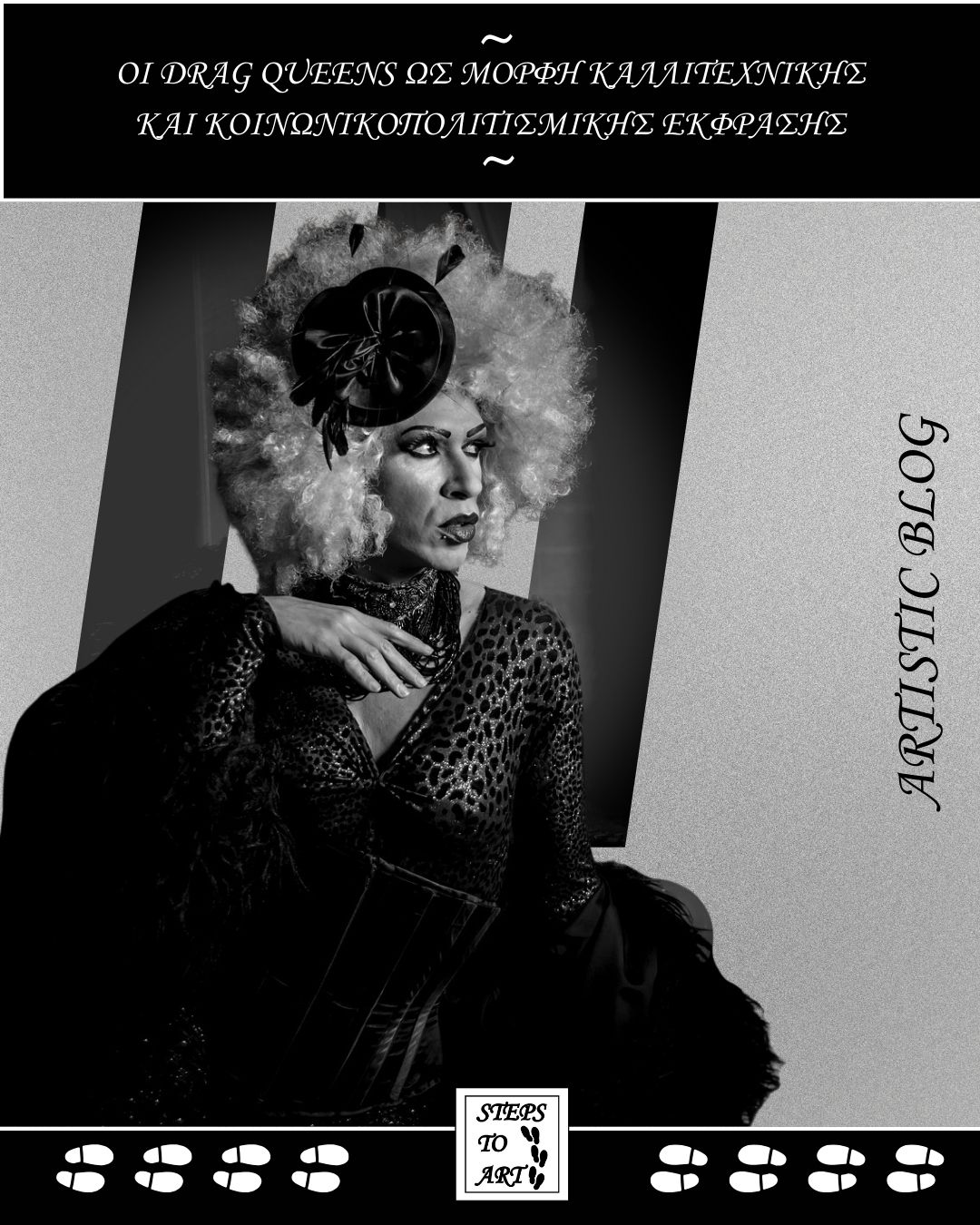
Drag queens are not just performers in fancy costumes. They are living, breathing works of art that blur the lines between theater, fashion, psychology, and social commentary. The roots of drag go way back in history, starting with ancient Greek and Elizabethan theater, where men played female roles because of social exclusion, not artistic choice (Baker, 1994). What began as a necessity gradually evolved into an intention. In the late 19th and early 20th centuries, drag found its true voice in vaudeville, cabaret, and underground queer spaces, where exaggeration became power and performance became protest (Senelick, 2000). Contemporary drag queens construct hyper-visible personas using heavy makeup, sculpted bodies, dramatic movement, and theatrical narration—not to imitate women, but to expose gender itself as something scripted, rehearsed, and performative. As Butler (1990) argued, drag pulls back the curtain on gender, revealing it as performance rather than destiny. In this way, drag does not whisper its message, it synchronizes it loudly under a spotlight.
What drag offers society is not only entertainment, but also emotion—raw, unfiltered, collective, and unapologetic. Drag performances are emotional workshops where joy, irony, rage, vulnerability, and resilience coexist in sequins and high heels. For the audience, drag creates moments of shared catharsis, especially for those who have felt unseen or constrained by social norms (Taylor and Rupp, 2005). For the performers themselves, drag often produces a powerful duality: the everyday self and the drag persona. Rather than causing psychological fragmentation, this division can enhance emotional regulation, self-confidence, and self-acceptance (Goldstein, 2019). Many drag queens describe their drag identity as an amplifying factor—making courage stronger, fear smaller, and emotion brighter. They describe their dual existence—the coexistence of a private self and a public drag persona. (Brennan and Gudelunas, 2017). The persona thus becomes a shield against stigma and a megaphone for truth, allowing performers to transform personal pain into community empowerment. In this way, drag performs emotional labor for society, teaching the audience that vulnerability can be glamorous and that authenticity does not have to be silent.
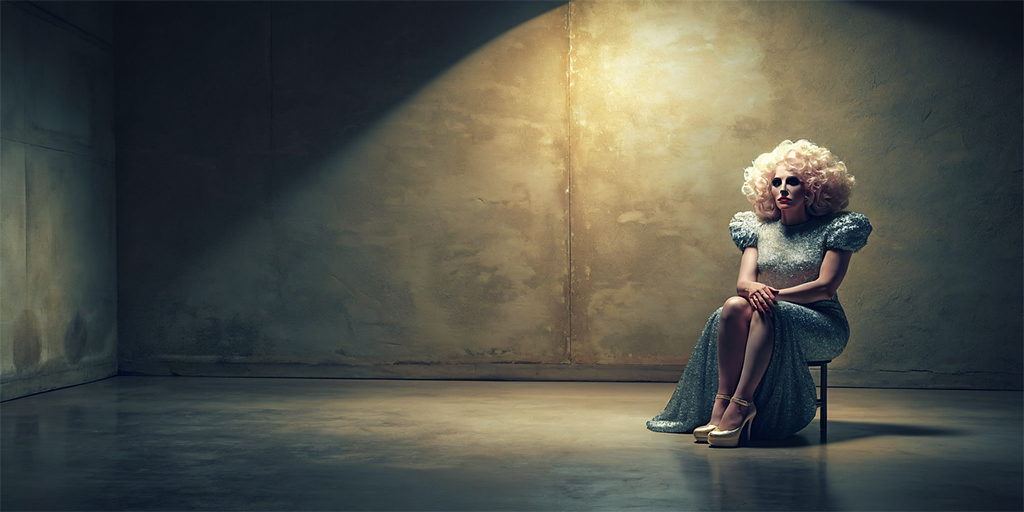
Despite its contributions, drag has also been subject to critical scrutiny, particularly in the context of feminist and cultural theory. Some critics have argued that the exaggerated femininity of drag risks reinforcing stereotypes by presenting gender as a parody rather than a complexity (Jeffreys, 2014). Others point to its widespread commercialization, suggesting that television and pop culture have softened its political edge, turning rebellion into digestible entertainment (Lewis, 2019). However, this tension—between subversion and celebration, criticism and caricature—is precisely where the artistic power of drag lies. Like all provocative art forms, drag thrives on discomfort. It forces society to question what is "real," what is "natural," and who decides. Drag queens do not offer easy answers. They offer mirrors covered in glitter, challenging us to look more closely. And in a world obsessed with rigid identities, drag reminds us that confidence, like art, is meant to be played with.
Bibliography:
Baker, R. (1994) Drag: A History of Female Impersonation in the Performing Arts. New York: New York University Press.
Brennan, N. and Gudelunas, D. (2017) RuPaul’s Drag Race and the Shifting Visibility of Drag Culture. London: Palgrave Macmillan.
Butler, J. (1990) Gender Trouble: Feminism and the Subversion of Identity. New York: Routledge.
Goldstein, T. (2019) ‘Performance, identity, and emotional regulation’, Psychology of Aesthetics, Creativity, and the Arts, 13(2), pp. 153–165.
Jeffreys, S. (2014) Gender Hurts: A Feminist Analysis of the Politics of Transgenderism. London: Routledge.
Lewis, R. (2019) ‘From subculture to mainstream: The commercialization of drag performance’, Cultural Sociology, 13(4), pp. 456–472.
Senelick, L. (2000) The Changing Room: Sex, Drag and Theatre. London: Routledge.
Taylor, V. and Rupp, L.J. (2005) ‘When the girls are men: Negotiating gender and sexual dynamics in a study of drag queens’, Signs, 30(4), pp. 2115–2139.
Columnist: